
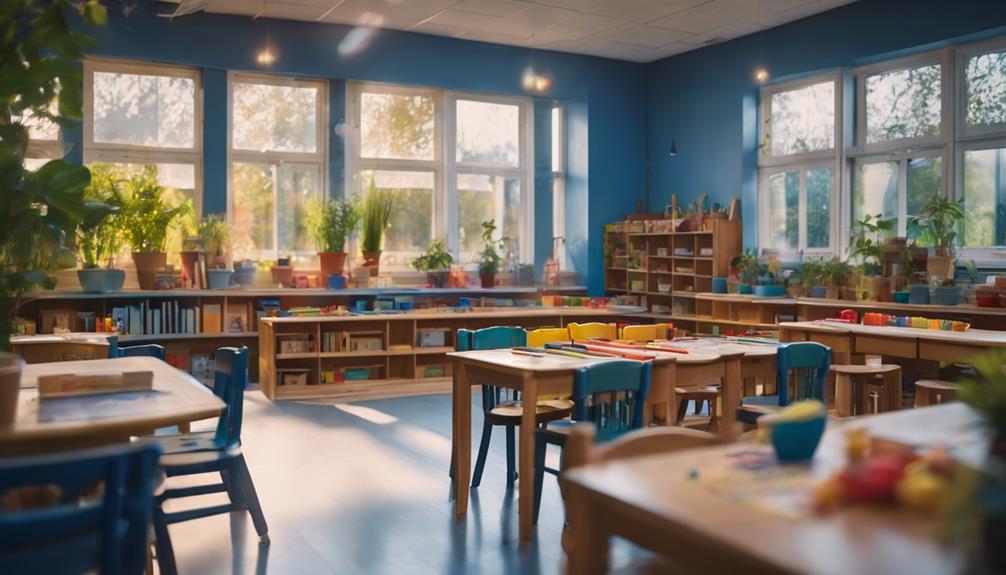
The Montessori educational approach provides both benefits and drawbacks for families to evaluate. Its child-centered model encourages independence, curiosity, and a love for learning. The self-directed activities enable children to investigate their interests in a supportive environment. Nevertheless, the lack of structure can challenge time management skills, and variability in teacher quality may influence the comprehensive experience. Additionally, this method may not suit all learning styles, potentially leading to disengagement. It is essential for parents to carefully assess how Montessori principles align with their child's needs and expectations to make an informed decision. More understanding awaits to fully grasp these considerations.
Main Points
- Montessori education fosters independence and a love of learning through self-directed activities and a prepared environment.
- Multi-age classrooms enhance social skills and collaboration through peer learning experiences.
- Hands-on materials engage diverse learning styles, promoting sensory exploration and intrinsic motivation.
- Lack of structure may hinder discipline and time management for some children, potentially impacting their learning experience.
Benefits of Montessori Education
Montessori education offers a child-centered approach that nurtures independence, curiosity, and a lifelong love of learning. This educational model emphasizes self-directed activity, allowing children to choose their learning paths within a prepared environment. By encouraging autonomy, Montessori supports critical thinking and problem-solving skills, enabling children to take ownership of their education.
Moreover, the multi-age classroom setting encourages peer learning, where older students mentor younger ones, improving social skills and collaboration. This interaction develops a sense of community and respect among peers, which is crucial for emotional development.
Montessori education also incorporates hands-on learning materials that are designed to engage children's senses. This tactile approach supports diverse learning styles, catering to varied intellectual and emotional needs. As students interact with these materials, they grasp abstract concepts through concrete experiences, reinforcing comprehension and retention.
Additionally, the unstructured time allotted for exploration allows children to explore deeply into topics of interest, nurturing intrinsic motivation. This self-directed exploration not only improves cognitive skills but also instills a passion for inquiry, laying a solid foundation for lifelong learning.
Ultimately, the Montessori method equips children with essential skills that extend beyond the classroom, preparing them for future endeavors.
Drawbacks of Montessori Education
While Montessori education offers numerous benefits, it also presents several drawbacks that may impact its effectiveness for certain students and families. One notable concern is the lack of structure compared to traditional educational systems. Some children thrive on routine, and the freedom to choose activities may lead to challenges in self-discipline and time management. Additionally, the emphasis on self-directed learning may not cater to all learning styles, particularly for those who require more guidance and support.
Another drawback includes the variability in the quality of Montessori programs. The training and certification of teachers can differ considerably, affecting the overall educational experience. Moreover, Montessori education may not adequately prepare students for standardized testing and traditional schooling environments, which can be a concern for families moving between educational systems.
Below is a table summarizing some key drawbacks of Montessori education:
| Drawback | Description | Impact on Students |
|---|---|---|
| Lack of Structure | Freedom may hinder discipline | Difficulty in self-management |
| Variability in Teacher Quality | Inconsistent training among educators | Uneven educational experiences |
| Learning Style Limitations | May not suit all learners | Potential disengagement |
| Preparation for Traditional Systems | Focus on self-directed learning may not align | Challenges in standardized testing |
Key Considerations for Parents
When investigating educational options, parents should carefully assess how Montessori principles align with their child's learning style and needs. Montessori education emphasizes self-directed learning, allowing children to delve into subjects at their own pace. This can be particularly beneficial for children who thrive in environments that encourage independence and critical thinking. Nevertheless, it may not suit every child, particularly those who require more structured guidance.
Parents should also consider the social aspects of Montessori education. Classrooms often comprise mixed-age groups, promoting collaborative learning and social development. This can improve peer interactions, but parents should determine if their child is comfortable in such environments.
Another key consideration is the availability of qualified Montessori educators. The effectiveness of a Montessori program largely depends on the teacher's training and understanding of the method. Parents should investigate the credentials of educators and the accreditation status of the school.
Common Questions
What Age Groups Benefit Most From Montessori Education?
Montessori education effectively benefits children aged 2.5 to 6 years, nurturing independence and self-directed learning. Additionally, elementary-aged students, typically 6 to 12 years old, also thrive in this environment, enhancing collaborative skills and critical thinking.
How Do Montessori Methods Differ From Traditional Teaching Styles?
Montessori methods emphasize child-centered learning, promoting independence and self-directed exploration, contrasting with traditional styles that prioritize teacher-led instruction and standardized curricula. This approach encourages critical thinking and flexibility, nurturing individual strengths and interests in educational settings.
Are Montessori Schools Regulated or Accredited?
Montessori schools are subject to varying degrees of regulation and accreditation, depending on the location. While some may hold accreditation from acknowledged organizations, others operate independently, emphasizing compliance with Montessori principles without formal regulatory oversight.
What Materials Are Commonly Used in Montessori Classrooms?
Common materials in Montessori classrooms include sensory objects, manipulatives, practical life tools, geometric shapes, language cards, and nature-based resources. These materials encourage hands-on learning, independence, and cognitive development, nurturing a child-centered educational environment.
How Can Parents Support Montessori Principles at Home?
Parents can support Montessori principles at home by nurturing independence, providing a prepared environment, encouraging exploration, promoting hands-on learning experiences, and respecting children's choices while engaging in meaningful conversations to improve their understanding and development.
Conclusion
In summary, Montessori education presents a unique approach that encourages independence, creativity, and individualized learning.
Nevertheless, potential drawbacks such as limited structure and varying outcomes may raise concerns for some families.
Careful consideration of both the benefits and drawbacks, alongside the specific needs of the child, is essential for parents when evaluating this educational model.
In the end, informed decisions can lead to a more suitable learning environment that aligns with the family's educational philosophy and goals.